on suicidality
or, fuck bildung i just want to die

“The life of his body, ill clad, ill fed, louse eaten, made him close his eyelids in a sudden spasm of despair and in the darkness he saw the brittle bright bodies of lice falling from the air and turning often as they fell. Yes, and it was not darkness that fell from the air. It was brightness. Brightness falls from the air. He had not even remembered rightly Nash’s line. All the images it had awakened were false. His mind bred vermin. His thoughts were lice born of the sweat of sloth.”
-A Portrait of The Artist as a Young Man, James Joyce
The dominant narrative surrounding suicidality in our society is that it is a condition with an end. At some point, the adolescent grows up and fully integrates into the system of capital. They stop feeling like they want to die. The most conservative version of this ends with them finding a spouse and having children, but the much more common, uncontroversial iteration (in the liberal imagination) ends with a happy young adult with a well-paying white collar job and a healthy amount of friends. Perhaps their assimilation is aided by SSRIs and CBT, but that is understood to be a necessary dietary element for the Enlightened Young Queer. I’ve tried the therapy and the antidepressants. I’ve held jobs that I’ve quite enjoyed and have left me feeling fulfilled. I’ve even taken the radical step of transition, the supposed “anti-suicide.”1 I still want to die.
Essentially my whole life I have (I would say “struggled with” or “suffered from” but those seem too quaint and saccharine) experienced suicidality. As a child I admonished my parents for having me and my sister when I learned how many amazing and interesting things they had done and how many cherished friends they had before having children that they were no longer able to do with them. I was eventually made to go into therapy after admitting I wanted to die, but I persistently denied it to my therapist. I’ve always held my cards close. COVID, as can be expected, aggravated my latent urges. At the age of 14 and in search for some meaning behind what seemed from my eyes to be the end of the world, I turned to extremist left-wing doomerism. I read the seminal text of the young, hopeless first-world autist, Desert2, which foretells an impending climate apocalypse, and followed it up with a healthy diet of Marxist theory, including the haunting Capitalist Realism by Mark Fisher, who himself died of suicide. Reading these alone in my room gave me some solace in the assurance that yes, the world is totally fucked, that I should be feeling horrible about it, that other people were feeling horrible about it as well, and most importantly, that there was very little I could do to arrest its inevitable and imminent end.
Naturally, I felt the need to take control over my life while I still could; to live my life as I wished given the futility of anything else. I came out as non-binary to the important people in my life, but so little changed that it might as well have not happened. Years later, I would come out as a trans woman, which went absolutely flawlessly. I had no trouble getting hormones whatsoever, everyone in my life was highly supportive, and overall I became a better person and was much better liked. I chose my new name as an explicit gesture of life-asserting rebirth: Noelle. I got a therapist who I like very much and started on Lexapro, the most bog-standard of all SSRIs. I took all the steps that were available to me to cure myself of suicidality. I just wanted to be normal; to forget about the meteor looming above my head, already crashing down in less fortunate parts of the world. I wanted to live the life my parents had envisioned for me: dinner parties, concerts, a nice apartment with an herb garden, plenty of books, a partner. The postmodern Bildungsbürgertum dream. Somehow I couldn’t stop seeing the meteor.
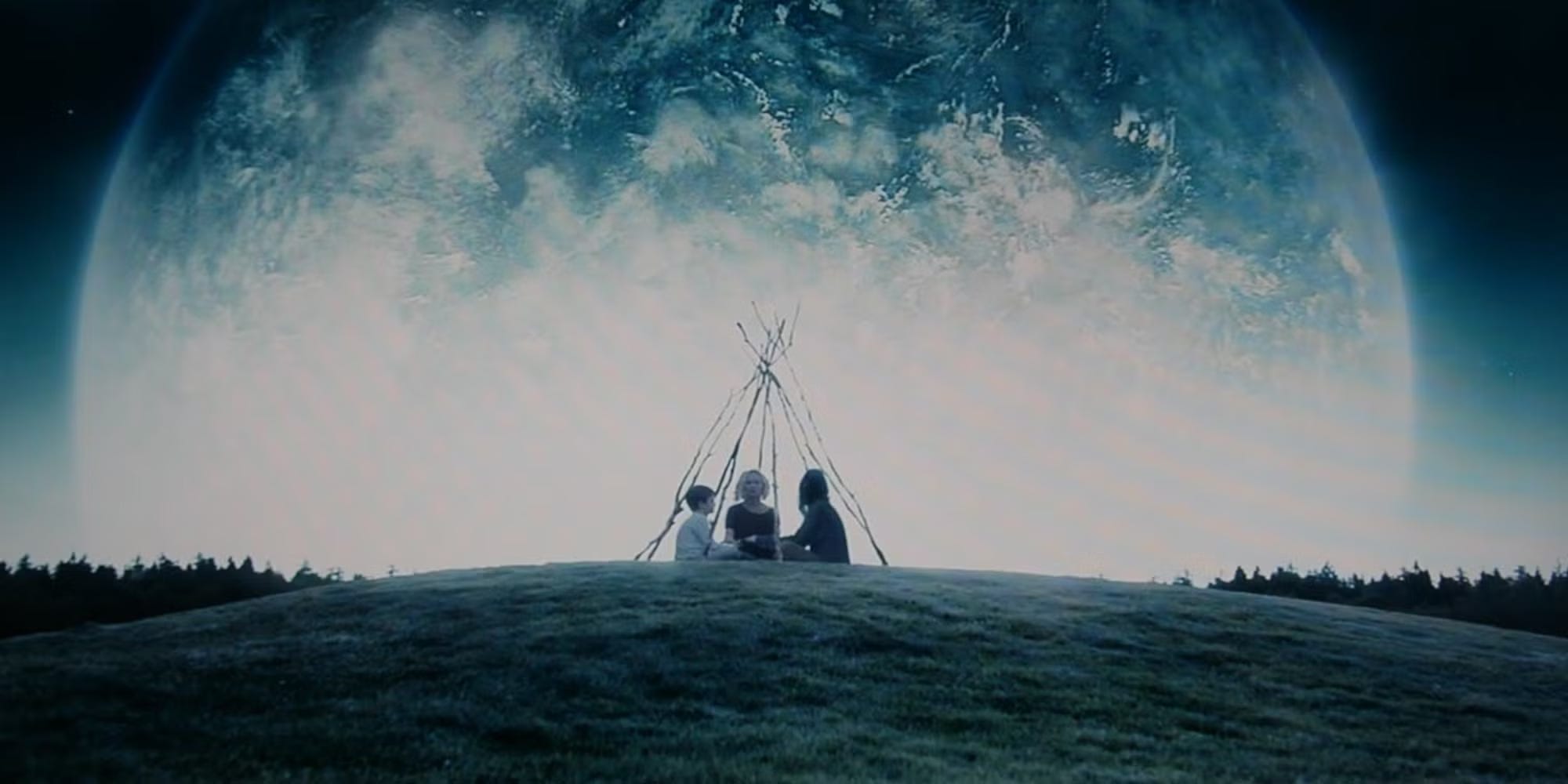
Sometime around this point I forced my parents to watch Lars Von Trier’s Melancholia with me. My dad, having a thing for Kirsten Dunst, agreed. They both hated it. My mom says that the movies me and my dad like are too depressing, and that she doesn’t like movies that make her want to kill herself. My dad, however, also thought it far too much of a downer. For me, Melancholia validated my feelings. Here was a group of people in essentially the same situation I felt I was in, desperately and hopelessly figuring out what to do with their remaining time on Earth. In fact, their situation is preferable. They know when the end is coming: Melancholia itself acts as a countdown timer. They know that there is absolutely nothing they can do to stop it. They no longer have any obligations to uphold: the world is about to end! Have fun while you still can! What about us who see Melancholia in the sky and have to go to work, maintain friendships, prepare for the future?
I am fully aware that this is the most first-world of all first-world problems. I am fully aware that my problems are peanuts compared to those of 99% of the world, even 99% of Americans. I have essentially every privilege in the world handed to me on a silver platter. That’s probably a large part of the reason I want to die in the first place. There’s something fellow nepo baby Maya Hawke said once that stuck with me: “There are so many people who deserve to have this kind of life who don’t, but I think I’m comfortable with not deserving it and doing it anyway.”3 I think many people took this as the ultimate expression of remorselessness among the American cultural hegemony, as they should, frankly. But I think I’m comfortable with not deserving suicidality and doing it anyway. All lives under capitalism are horrible. Essentially everyone lives more horrible lives than have ever been lived by anyone in humanity in this current moment. I give to Palestinians, who are being killed thanks to my tax dollars. I type this on my MacBook produced using blood coltan from the Congo. I cry into my pillow sewed by underpaid garment workers in God-knows-what Asian country in my parents’ house literally built on what was once a slave plantation, funded by generational wealth founded on white supremacy. My ancestors and I have plundered the entire world for riches and destroyed the lives of billions just so I could feel so guilty about it that I fantasize about stabbing a knife through my throat. This whole thing fucking sucks, and no one can find it in them to say I’m wrong. Depression is no longer, or perhaps never was, a medical problem. It’s an expected, normative response to living in this world.4
I know that the Christian response to this dilemma I find myself in is quite clear: “Let all that you do be done in love.”5 I know that I should stick by that, since it’s the only thing I can control, and have faith that things will turn out. I have no qualms with that, except for that it doesn’t work for me, at least not in the moment. I try, and I have not lost so much wherewithal that I don’t have the urge to help others, but I feel that nothing I do will ever be enough, that I do more harm than good. I wish I didn’t, and I know Christ doesn’t want me to, but my incredible debt to the world feels too overwhelming: I still want to die.
This is not a suicide note. I’m going to keep trying to live, in spite of my urges. I’m going to meet new people, try new things, and do my best to devote my life to others (since it’s already a foregone conclusion that I can’t live for myself). My life will get better. I know this. I am not so entirely hopeless as to deny this. Yet, I am also near certain that I will want to die the whole time. Suicidality will be the devil on my shoulder the whole time. To live in spite of my selfish, carnal desire for death, to remain in this doomed world I so desperately want to leave, seems a fitting enough refusal to constitute a life. Christ could have ascended at any time, leaving us to our just fate, but he stayed with us, even though it meant torment on the Cross by our hands. He did it because he loved us. I’m sure there were times when he doubted it, when he wanted to leave this wretched earth. Yet not only did he stay, he came back. He brought Rome to its knees and he will bring the new Rome on Turtle Island down too. I have to stay here, for those who don’t have the privilege of suicidality. I have to stay here.
“Or one meaning of here is ‘In this world, in this life, on earth. In this place or position, indicating the presence of,’ or in other words, I am here. It also means to hand something to somebody—Here you are. Here, he said to her. Here both recognizes and demands recognition. I see you, or here, he said to her. In order for something to be handed over a hand must extend and a hand must receive. We must both be here in this world in this life in this place indicating the presence of.”
-Don’t Let Me Be Lonely, Claudia Rankine
“Considering mental illness an individual chemico-biological problem has enormous benefits for capitalism. First, it reinforces Capital's drive towards atomistic individualization (you are sick because of your brain chemistry). Second, it provides an enormously lucrative market in which multinational pharmaceutical companies can peddle their pharmaceuticals (we can cure you with our SSRls). It goes without saying that all mental illnesses are neurologically instantiated, but this says nothing about their causation. If it is true, for instance, that depression is constituted by low serotonin levels, what still needs to be explained is why particular individuals have low levels of serotonin. This requires a social and political explanation; and the task of repoliticizing mental illness is an urgent one if the left wants to challenge capitalist realism.” Capitalist Realism, Mark Fisher
1 Corinthians 16:14